
 NEWS Desk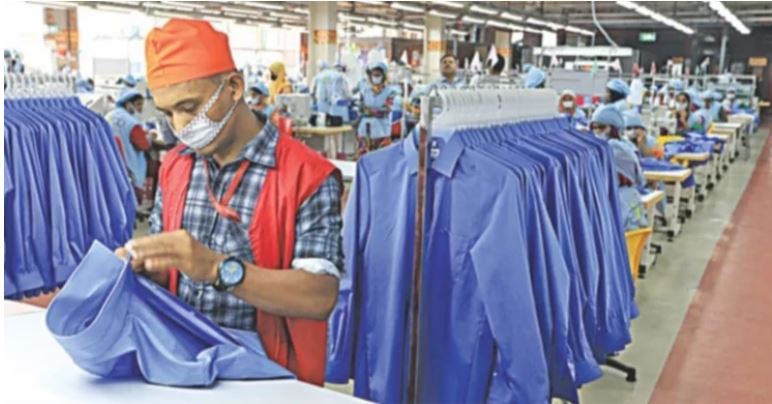
China signaled on Friday that the United States could restore Hong Kong ‘s preferential privileges, saying Washington confirmed it will not renew an executive order that revoked the city’s special trading status. The Commerce Ministry said that the U.S. made commitments on Hong Kong issues and other matters during the U.S.-China trade talks in Madrid last year. The U.S. recently confirmed to China that the President’s Executive Order on Hong Kong Normalization would end, the ministry said in a statement responding to media questions. “The U.S. side’s actions represent an important step in fulfilling the consensus reached during the bilateral economic and trade talks. China appreciates it,” it said. It is not immediately clear what all the implications of the decision are. The White House referred questions about the executive order lapsing to the Treasury Department. The U.S. Office of Foreign Assets Control said in a statement Friday that the national emergency declared in the executive order had expired and that it delisted people who were sanctioned under the order. But it said people who remain sanctioned under another act related to Hong Kong have been added to a different sanction list. The statement showed Hong Kong leader John Lee and his predecessor, Carrie Lam, were removed from the first list but added to the second one The U.S. decision came two months after President Donald Trump met with his counterpart Xi Jinping in Beijing. It could warm ties between them ahead of Xi’s expected visit to the U.S. later this year. Earlier this month, a pastor of a prominent underground church who was detained in China in October was released after Trump brought up his case with Xi. Trump signed the now-expired executive order in July 2020, during his first term in response to Beijing imposing a national security law that year. Trump’s order was last renewed for a year in July 2025. Under the order, Trump said Hong Kong was no longer sufficiently autonomous to justify differential treatment in relation to mainland China under certain laws. It eliminated the preferential treatment for Hong Kong to the extent permitted by law and in the national security, foreign policy, and economic interest of the United States. China considers the national security law for Hong Kong necessary to restore stability in the city after massive anti-government protests in 2019. The pro-democracy movement back then posed one of the biggest challenges to the Communist Party in Beijing and the Hong Kong government since the former British colony returned to Chinese rule in 1997. Six years after the law’s introduction, many leading activists, including pro-democracy former media tycoon Jimmy Lai, were imprisoned under it. Critics say the Western-style civil liberties that Beijing promised to maintain for 50 years after the handover have declined. Hong Kong government said in a statement that it noted the “positive shift in the U.S. policy” toward the city. “Safeguarding Hong Kong’s prosperity and stability serves the common interests of China and the US, and also aligns with the general expectation of the international community,” it said. It said it hopes the U.S. will respect China’s sovereignty and the rule of law in Hong Kong and resume normal economic and trade exchanges with the city.
Bangladesh’s apparel exports to the European Union (EU) slumped by 18.89 percent year-on-year to €7.28 billion ($8.33 billion) in the first five months of 2026 (January-May), marking the steepest decline among the region’s major global suppliers. GeographicReference
According to Eurostat data analysed by Mohiuddin Rubel, founder and CEO of Bangladesh Apparel Voice, the country is facing a critical “dual weakness,” losing ground on both shipment volume and unit price simultaneously.
During the period, Bangladesh’s apparel export volume to the EU fell by 10.46 percent, while its unit price dropped by 9.41 percent. Both figures are roughly double the global average decline.
Overall EU Demand Shrinks
The downturn reflects a broader contraction in the EU apparel market. Total EU apparel imports from the world fell by 9.96 percent year-on-year to €33.84 billion ($38.71 billion), down from €37.58 billion ($43.00 billion) in the same period last year.
The global decline was driven by a 6.46 percent drop in volume and a 3.74 percent decline in unit prices, suggesting that weaker consumer demand and softer pricing contributed almost equally to the market contraction.
However, Bangladesh’s performance in May alone showed worsening vulnerability, with export value sliding by 17.12 percent, volume down by 13.55 percent, and unit prices dropping by 4.13 percent.
Mixed Performance Among Competitors
While Bangladesh struggled on both fronts, its global competitors showed mixed resilience by adopting different market strategies. GeographicReference
China – the leading supplier – recorded the smallest value decline of 4.20 percent. It was the only major exporter to grow its shipment volume, which rose by 1.96 percent, defending its market share through a 6.05 percent price cut.
Vietnam emerged as the most resilient exporter, with its export value dipping just 1.51 percent. Despite a sharp 12.27 percent drop in volume, it defended its value through premium positioning, pushing its unit price up by 12.26 percent.
Pakistan’s export value fell by 17.01 percent despite a 3 percent increase in volume, suffering from a major unit price collapse of 19.43 percent.
India experienced a milder version of Bangladesh’s dual weakness, with its export value declining by 13.33 percent.
Turkey and Cambodia faced volume-led declines of 17.17 percent and 15.13 percent, respectively, though their unit prices saw upward adjustments.
Indonesia experienced the sharpest volume contraction among all suppliers, plunging 23.76 percent.
Sustained Structural Concerns
Highlighting the gravity of the data, Mohiuddin Rubel noted that Bangladesh is currently the only major apparel supplier losing on both volume and price at this scale – contrasting sharply with Vietnam’s price-resilience and China’s volume-resilience.
He warned that because this dual weakness has persisted from April into May, it points to a sustained structural problem within Bangladesh’s apparel sector rather than a temporary, one-month blip.
Post by News Desk


